
Living Museum of Learning
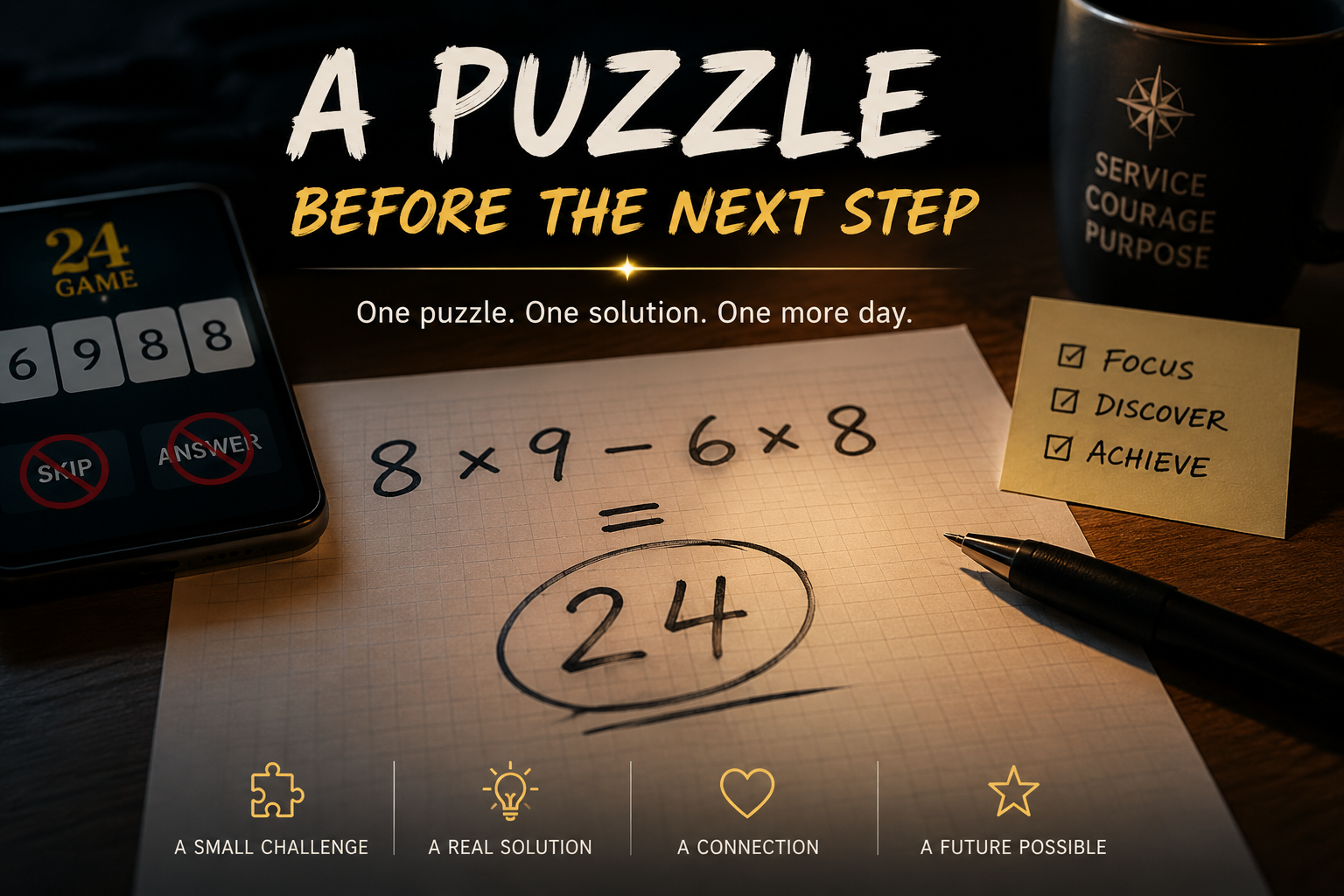
A Puzzle Before the Next Step
A 19-year-old young man had gradually lost his direction. Cannabis use had become heavy. He had experienced months of vomiting, struggled to follow rules, and blamed his parents for years of control and pressure. Possible ADHD, depression, and family conflict had left everyone exhausted. His father had recently gone to the emergency room with chest pain. After years of trying to help, he admitted something difficult: "To be honest, I also need help to get through everyday life."
One evening, three siblings spent four to five hours talking. The conversation touched almost everything: medical concerns, ADHD, military service, future careers, boundaries, hope. A simple challenge emerged. An uncle sent a small gift: Golden 24. No Skip. No Answer. Five days. Just send screenshots. Nobody expected anything.
Only a short time later, messages began appearing. He's doing 6988. A few minutes later: 8 × 9 − 6 × 8 His first solution. Then: Now 5 4 1 6. For years, conversations had centered on conflict: rules, cannabis, money, disappointment. For a brief moment, the conversation changed. A father was no longer reporting another problem. He was reporting progress.
Learning is often associated with acceleration.
Advanced mathematics.
Programming.
Competition.
Achievement.
But learning can also play another role.
A puzzle offers:
a goal, a rule, a challenge, a solution, a small success.
Sometimes that is enough to reopen attention.
Sometimes it is enough to reopen conversation.
Before recovery.
Before careers.
Before major life decisions.
There may be:
one puzzle,
one screenshot,
one more day.